The simple answer is no. Syphilis does not go away on its own. Although some symptoms may disappear over time, the infection remains in the body unless it is treated with the appropriate antibiotics.
This can create a false sense of recovery, leading some people to believe they are no longer infected when, in fact, the disease is still progressing.
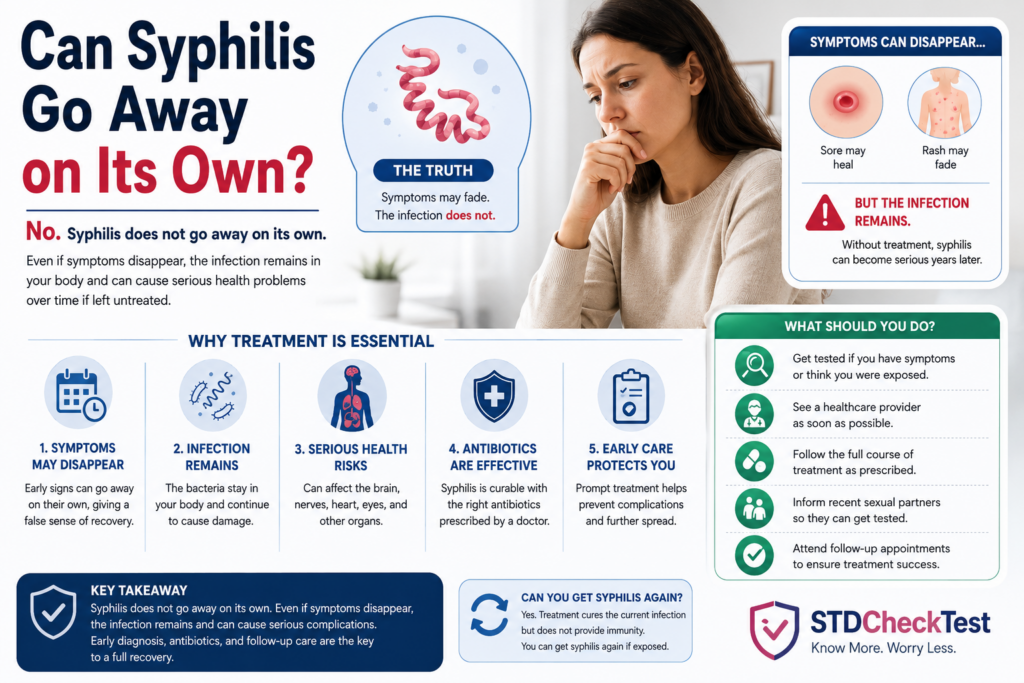
Why Do the Symptoms Sometimes Disappear?
One of the confusing aspects of syphilis is that its early symptoms can resolve without treatment.
For example, a painless sore may heal naturally, and a skin rash can fade after several weeks. While these changes may seem reassuring, they do not mean the bacteria have been eliminated.
Without treatment, the infection can remain inactive for years before causing more serious health problems.
What Happens If It’s Left Untreated?
Even after visible symptoms disappear, the infection may continue to affect the body.
Over time, untreated syphilis can damage:
- The brain and nervous system
- The heart and blood vessels
- The eyes
- Other organs
These complications may develop years after the initial infection, making early treatment especially important.
Can the Immune System Clear Syphilis?
Unlike some infections that the immune system can eliminate on its own, syphilis generally requires antibiotic treatment.
Your immune system responds to the infection, but it is not enough to completely remove the bacteria from the body.
For this reason, waiting for symptoms to disappear is not a safe approach.

How Is Syphilis Treated?
Most cases of syphilis can be successfully treated with antibiotics prescribed by a healthcare provider.
The type of treatment depends on:
- How long you’ve had the infection.
- The stage of the disease.
- Whether complications have developed.
- Whether you are pregnant.
Following the prescribed treatment plan and attending any recommended follow-up appointments helps confirm that treatment has been successful.
What Should You Do If You Think You Have Syphilis?
If you notice symptoms or believe you’ve been exposed:
- Avoid sexual activity until you’ve been evaluated.
- Arrange a medical examination as soon as possible.
- Follow your healthcare provider’s treatment recommendations.
- Inform recent sexual partners if necessary.
- Complete the full course of treatment and follow-up testing if advised.
Acting early reduces the chance of long-term complications and helps prevent further transmission.
Can You Get Syphilis Again After Treatment?
Yes.
Successful treatment removes the current infection, but it does not provide immunity. If you’re exposed again in the future, you can become infected again.
Practicing safer sex and getting tested when appropriate remain important after treatment.
Key Takeaway
Syphilis does not disappear without treatment. Although symptoms may fade on their own, the infection remains in the body and can lead to serious health problems over time. Early diagnosis, appropriate antibiotics, and follow-up care provide the best chance for a full recovery.
Frequently Asked Questions
Can syphilis disappear without treatment?
No. Symptoms may improve, but the infection remains unless it is treated with antibiotics.
Why did my sore heal if I still have syphilis?
The early sore often heals naturally, but this is part of the normal course of the infection and does not mean you are cured.
Can untreated syphilis become serious?
Yes. Without treatment, the infection can eventually affect the nervous system, heart, eyes, and other organs.
Can I get syphilis again after treatment?
Yes. Previous treatment does not protect you from becoming infected again if you are exposed in the future.
Reference links:
1.Centers for Disease Control and Prevention (CDC) – Syphilis
2. World Health Organization (WHO) – Sexually Transmitted Infections
More informations:
