Yes, it is possible to get syphilis from kissing, but the risk is generally low. Transmission usually requires direct contact with an infectious syphilis sore (chancre) or a mucous patch in or around the mouth.
Syphilis is primarily transmitted through vaginal, anal, or oral sex. However, if an infected person has a sore on their lips, tongue, gums, or inside the mouth, deep or prolonged kissing can spread the bacteria.
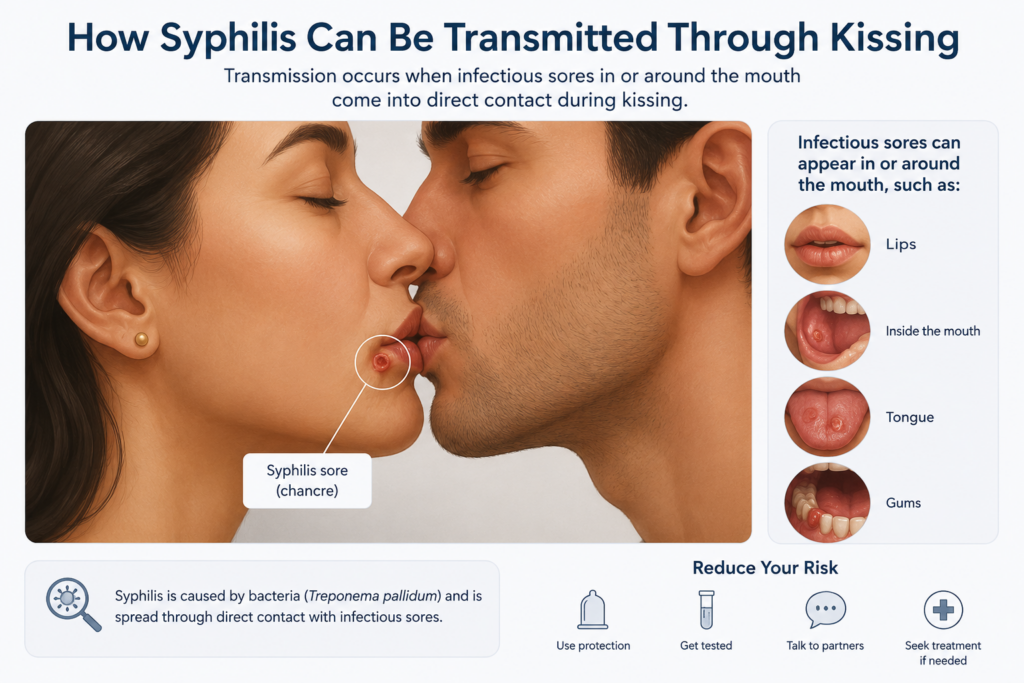
How Is Syphilis Spread?
Syphilis is caused by the bacterium Treponema pallidum. The infection spreads through direct contact with infectious sores during:
- Vaginal sex
- Anal sex
- Oral sex
- Kissing when infectious sores are present
- From a pregnant person to their baby during pregnancy
Syphilis is not spread by casual contact such as:
- Hugging
- Shaking hands
- Sharing food or drinks
- Using the same toilet
- Swimming pools
- Sharing towels
Is Deep Kissing a Risk?
Yes, but only under specific circumstances.
The risk exists when:
- One person has an active syphilis sore on the lips or inside the mouth.
- The sore comes into direct contact with the other person’s mouth.
- The bacteria enter through tiny cuts or the moist lining of the mouth.
If there are no active sores, kissing alone is considered a very unlikely way to transmit syphilis.

What Do Oral Syphilis Sores Look Like?
A syphilis sore (chancre) may appear as:
- A small, round ulcer
- Firm with smooth edges
- Usually painless
- On the lips
- Inside the mouth
- On the tongue
- On the gums
- In the throat
Because these sores are often painless, many people do not realize they are infected.
What Are the Symptoms After Exposure?
Early symptoms may include:
- A painless sore
- Swollen lymph nodes
- Sore throat
- Rash on the body, especially the palms and soles
- Fever
- Fatigue
- Mouth ulcers
Many people have very mild symptoms or none at all.
When Should You Get Tested?
If you kissed someone who later tested positive for syphilis or had visible mouth sores, consider getting tested.
Most healthcare providers recommend waiting 3–6 weeks after a potential exposure before relying on a blood test, although testing earlier may be appropriate if symptoms develop or a healthcare provider recommends it.
If your first test is negative but the exposure was recent, your provider may recommend repeat testing because antibodies can take time to become detectable.
Testing After Possible Exposure
Diagnosis usually involves:
- Blood tests (treponemal and non-treponemal tests)
- Physical examination
- Testing of fluid from a sore in some situations
Early diagnosis allows treatment before complications develop.
Treatment Options
Syphilis is curable, especially when diagnosed early.
Treatment typically involves antibiotics, most commonly benzathine penicillin G, prescribed by a healthcare professional. The exact treatment depends on the stage of infection.
Avoid sexual contact until treatment is complete and your healthcare provider confirms it is safe to resume sexual activity.
How to Reduce Your Risk
You can lower your risk by:
- Avoiding kissing someone with visible mouth sores.
- Using condoms and dental dams during sexual activity.
- Getting regular STI testing if you’re sexually active.
- Informing partners if you are diagnosed with an STI.
- Completing treatment exactly as prescribed.
Frequently Asked Questions
Can you get syphilis from a kiss on the cheek?
No. A kiss on the cheek does not transmit syphilis.
Can you get syphilis from kissing without sores?
The risk is extremely low. Transmission generally requires direct contact with an infectious sore or mucous patch.
Can oral syphilis go unnoticed?
Yes. Oral sores are often painless and may be hidden inside the mouth, making them easy to miss.
Should I get tested after kissing someone with syphilis?
If the person had active oral sores or you are concerned about a possible exposure, speak with a healthcare provider about testing. Early evaluation is especially important if you develop symptoms.
Key Takeaway
While syphilis from kissing is possible, it is uncommon and usually requires direct contact with an active sore in or around the mouth. Because symptoms can be subtle or absent, testing is the best way to know your status if you believe you’ve been exposed. Early diagnosis and treatment are highly effective and help prevent transmission to others.
Reference links:
1.Centers for Disease Control and Prevention (CDC) – Syphilis
2. World Health Organization (WHO) – Sexually Transmitted Infections
More information:
