Concerns about future fertility are common after a positive test. Fortunately, timely treatment usually prevents the infection from causing long-term reproductive health problems. While untreated syphilis can lead to serious complications, it is not considered a common direct cause of infertility in women.
The greatest concern is not permanent infertility itself, but the damage an untreated infection can cause over time.
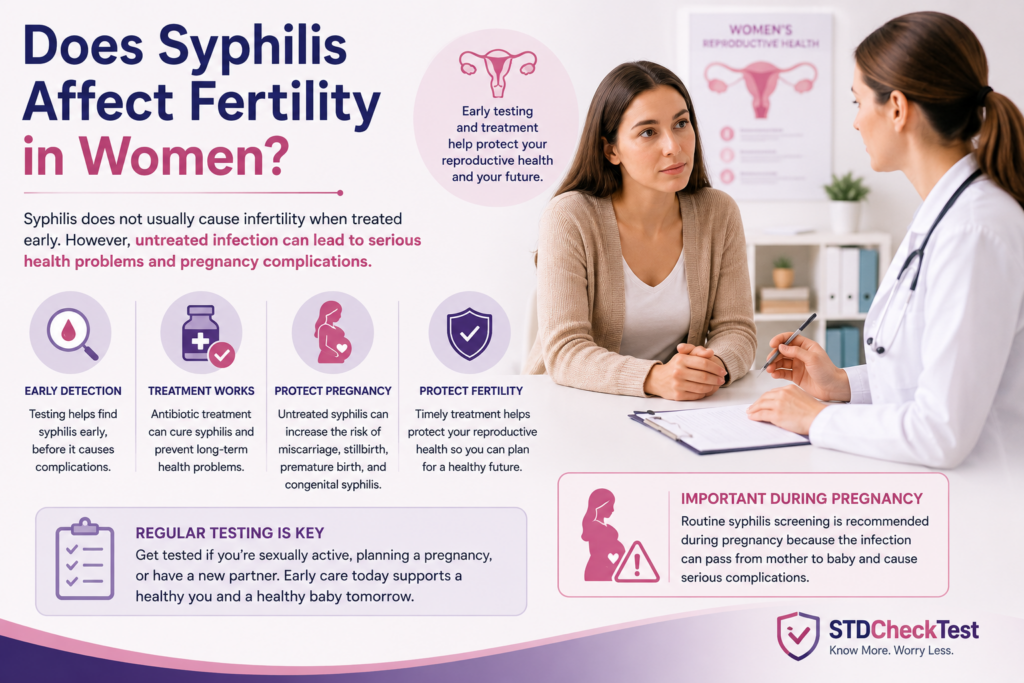
Can Syphilis Make It Harder to Get Pregnant?
Unlike some sexually transmitted infections that directly damage the fallopian tubes, syphilis is not considered a common cause of female infertility.
Most women who receive appropriate treatment can become pregnant without syphilis affecting their fertility.
If reproductive difficulties occur, healthcare providers will often investigate other possible causes in addition to testing for sexually transmitted infections.
Why Early Treatment Is Important
Syphilis progresses through several stages if left untreated. During this time, the infection can spread beyond its original site and affect different parts of the body.
Early diagnosis and treatment:
- Stop the infection from progressing.
- Prevent serious long-term complications.
- Reduce the risk of transmitting the infection to others.
- Help protect future pregnancies.
Treatment cannot reverse damage that has already occurred, which is why prompt medical care is important.

What Happens During Pregnancy?
Syphilis is especially important to identify before or during pregnancy because the infection can pass from a pregnant woman to her baby.
Untreated maternal syphilis increases the risk of:
- Miscarriage.
- Stillbirth.
- Premature birth.
- Low birth weight.
- Congenital syphilis in the newborn.
For this reason, routine syphilis screening is recommended during pregnancy in many countries.
Can Fertility Return After Treatment?
If syphilis is treated before complications develop, fertility is generally not expected to be affected.
Successful treatment removes the infection, but it cannot repair damage caused by advanced disease. Women who have concerns about fertility after treatment should discuss them with their healthcare provider, who may recommend additional reproductive evaluation if needed.
When Should You See a Healthcare Provider?
Consider medical advice if you:
- Are planning a pregnancy.
- Learn that a current or former partner has syphilis.
- Receive a positive syphilis test.
- Have symptoms that could suggest a sexually transmitted infection.
- Experience difficulty becoming pregnant after trying for several months.
Early evaluation allows appropriate testing and treatment if necessary.
How Can You Protect Your Reproductive Health?
Taking care of your sexual health also helps protect your reproductive health.
Helpful steps include:
- Getting regular STI screening if you’re sexually active.
- Discussing testing with new partners.
- Seeking treatment promptly if diagnosed with an infection.
- Attending all recommended prenatal appointments during pregnancy.
These habits can reduce the likelihood of untreated infections and support a healthy pregnancy in the future.
Key Takeaway
Most women treated early do not experience fertility problems because of this infection. The greatest risks are linked to untreated disease, especially during pregnancy. The biggest risks are associated with untreated infection, particularly during pregnancy, where complications can affect both the mother and baby. Regular screening and timely treatment remain the best ways to protect reproductive health.
Frequently Asked Questions
Can this infection cause permanent fertility problems?
Most women who receive early treatment do not experience permanent fertility problems because of syphilis. Long-term untreated infection may increase the risk of serious health complications.
Can I have a healthy pregnancy after treatment?
Yes. In most cases, women who have been successfully treated for syphilis can become pregnant normally.
Does syphilis affect pregnancy?
Yes. Untreated syphilis during pregnancy can increase the risk of miscarriage, stillbirth, premature birth, and congenital syphilis.
Should I get tested before trying to conceive?
If you have risk factors for sexually transmitted infections or are unsure of your status, STI screening before pregnancy is a sensible step to help protect both you and your future baby.
Reference links:
1.CDC – Syphilis During Pregnancy
2. World Health Organization (WHO) – Sexually Transmitted Infections
3. American College of Obstetricians and Gynecologists (ACOG) – Routine Tests During Pregnancy
More informations:
