The short answer is yes. While condoms greatly reduce the risk of syphilis, they cannot provide complete protection because the infection may be transmitted through contact with skin that is not covered by the condom.
Many people assume that using a condom completely eliminates the risk of sexually transmitted infections. Although condoms are one of the most effective ways to reduce STI transmission, syphilis is different from infections that spread only through bodily fluids.
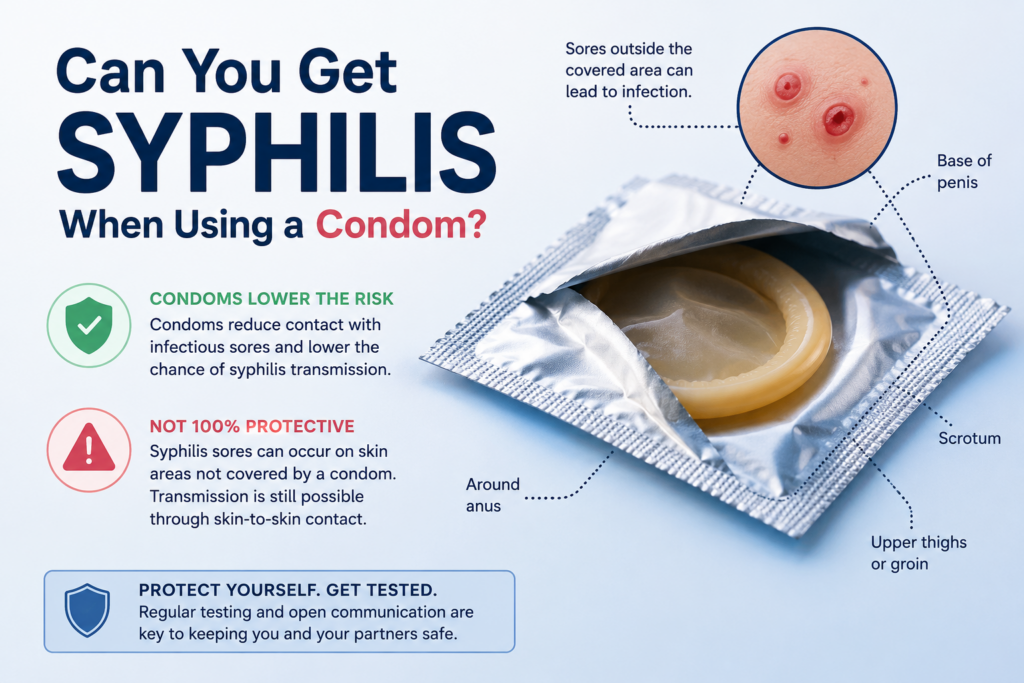
Why Aren’t Condoms 100% Effective Against Syphilis?
Syphilis spreads through direct contact with an infectious sore during vaginal, anal, or oral sex. If that sore is located on an area covered by the condom, the risk is significantly reduced.
However, sores can also develop on nearby skin, including:
- The base of the penis
- The scrotum
- The vulva
- Around the anus
- The upper thighs or groin
Because these areas remain uncovered, transmission is still possible even when a condom is used correctly.
Does Using a Condom Still Help?
Absolutely.
Using a condom consistently and correctly is one of the best ways to lower your risk of syphilis and many other sexually transmitted infections.
A condom can:
- Reduce direct contact with infectious sores.
- Lower the chance of exposure during sex.
- Help protect against infections spread through bodily fluids.
- Reduce the overall risk of STI transmission.
Although no method other than abstinence offers complete protection, condoms remain an essential part of safer sex.

What If the Condom Didn’t Break?
If the condom stayed in place throughout sex and was used correctly from start to finish, your risk is generally lower.
However, no one can determine your exact level of risk without knowing whether your partner had an infectious sore and where it was located. Since syphilis sores are often painless and may go unnoticed, a person can transmit the infection without realizing it.
What If the Condom Broke or Slipped Off?
A condom that tears, leaks, or slips off provides less protection.
If this happens and you believe your partner may have syphilis or another sexually transmitted infection, consider speaking with a healthcare provider about whether testing is appropriate.
Testing is especially important if:
- Your partner later tells you they have syphilis.
- You notice a painless sore or unusual rash.
- You have had a recent new sexual partner.
- You are pregnant.
Should You Get Tested After Protected Sex?
Not everyone who has protected sex needs immediate testing.
However, testing is recommended if you know or suspect that you were exposed to syphilis, develop symptoms, or have ongoing risk factors such as multiple sexual partners.
Keep in mind that syphilis may not cause symptoms during its early stages. A laboratory test is the only reliable way to confirm whether you have the infection.
How Can You Further Reduce Your Risk?
Condoms work best when combined with other preventive measures.
You can reduce your risk by:
- Using a new condom every time you have sex.
- Getting tested regularly if you’re sexually active.
- Asking new partners about STI testing.
- Avoiding sexual contact if either partner has sores or unexplained rashes.
- Completing treatment promptly if diagnosed with syphilis.
These steps provide better protection than relying on condoms alone.
Key Takeaway
Using a condom significantly lowers the risk of syphilis, but it does not eliminate it completely. Because infectious sores can appear on skin that is not covered by a condom, transmission is still possible. If you think you may have been exposed or develop symptoms, getting tested is the best way to protect your health and your partners.
Frequently Asked Questions
Can you get syphilis even if you always use condoms?
Yes. Consistent condom use greatly lowers the risk, but it cannot completely prevent syphilis because infectious sores may be located outside the area covered by the condom.
Is syphilis less likely if the condom didn’t break?
Generally, yes. A condom that remains intact provides better protection than one that breaks or slips off. However, it cannot protect against contact with uncovered skin.
Can you get syphilis from protected oral sex?
Yes. Although condoms and dental dams reduce the risk, syphilis can still spread if an infectious sore is present on skin or mucous membranes that remain exposed.
Should I get tested after having protected sex?
Testing is recommended if you know your partner has syphilis, develop symptoms, or believe you may have been exposed. If you’re sexually active with new or multiple partners, regular STI screening is also a good idea.
Reference links:
1.Centers for Disease Control and Prevention (CDC) – Syphilis
2. World Health Organization (WHO) – Sexually Transmitted Infections
More information:
