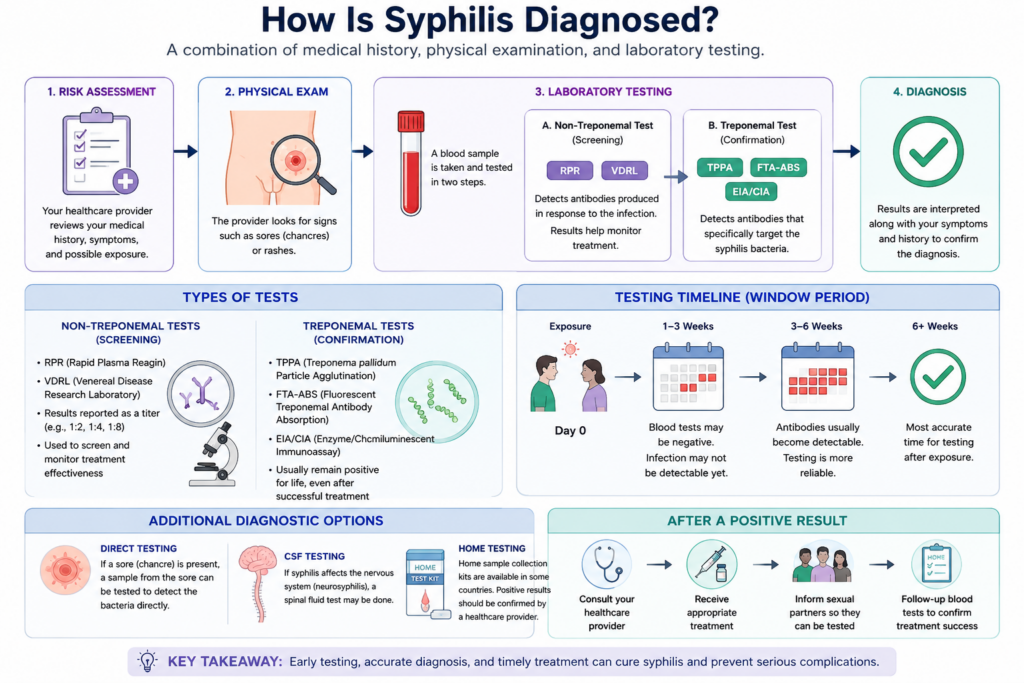
Syphilis is diagnosed through a combination of medical history, physical examination, and laboratory testing. Early diagnosis is essential because syphilis can often be treated successfully with antibiotics before it causes serious health complications.
When Should You Get Tested for Syphilis?
You should consider getting tested if you:
- Have had unprotected sex.
- Have a new or multiple sexual partners.
- Have been notified that a partner has syphilis.
- Notice a painless sore (chancre) on your genitals, mouth, or anus.
- Develop an unexplained rash, especially on your palms or soles.
- Are pregnant, as syphilis can be passed to the baby.
Even if you have no symptoms, testing is recommended if you believe you have been exposed.

What Tests Are Used to Diagnose Syphilis?
Healthcare providers usually diagnose syphilis using blood tests.
Non-Treponemal Tests
These tests detect antibodies produced in response to the infection rather than the bacteria itself.
Common tests include:
- RPR (Rapid Plasma Reagin)
- VDRL (Venereal Disease Research Laboratory)
These tests are commonly used for initial screening and to monitor treatment success.
Treponemal Tests
If the screening test is positive, a treponemal test is typically performed to confirm the diagnosis.
Examples include:
- TPPA (Treponema pallidum Particle Agglutination)
- FTA-ABS (Fluorescent Treponemal Antibody Absorption)
- EIA/CIA antibody tests
Treponemal tests usually remain positive for life, even after successful treatment.
Can Syphilis Be Diagnosed During the First Few Weeks?
Not always.
After infection, your body needs time to produce detectable antibodies. This period is known as the window period.
- Very early infections may produce negative blood tests.
- If exposure was recent, your healthcare provider may recommend repeat testing after several weeks.
Can a Sore Be Tested Directly?
Yes.
If a chancre is present, a healthcare professional may collect a sample from the sore for laboratory testing. Direct testing can sometimes detect the bacteria before blood tests become positive.
How Accurate Are Syphilis Tests?
Modern laboratory tests are highly accurate when performed at the appropriate time after exposure.
Accuracy depends on:
- The stage of infection.
- The type of test used.
- How long it has been since exposure.
If there is strong suspicion of infection despite a negative result, repeat testing may be recommended.

What Happens If You Test Positive?
If your test is positive:
- Your healthcare provider will determine the stage of infection.
- Antibiotic treatment, usually penicillin, will be recommended.
- Sexual partners should be informed so they can also be tested.
- Follow-up blood tests may be performed to confirm that treatment has been successful.
Prompt treatment helps prevent complications and reduces the risk of transmitting the infection to others.
Can You Test at Home?
Home sample collection kits are available in some countries. These typically involve collecting a small blood sample by finger prick and sending it to a certified laboratory.
Positive results should always be discussed with a healthcare provider, who can confirm the diagnosis and recommend appropriate treatment.
Frequently Asked Questions
Is a blood test enough to diagnose syphilis?
In most cases, yes. Blood tests are the standard method for diagnosing syphilis. Additional tests may be used if symptoms are present or if the infection affects the nervous system.
How long after exposure should I get tested?
Testing is generally most reliable several weeks after exposure. If you are tested too early, your healthcare provider may recommend repeating the test.
Can syphilis be diagnosed without symptoms?
Yes. Many people have no symptoms during the early stages of infection. Routine STI screening is the best way to detect these infections.
Key Takeaway
Syphilis is diagnosed primarily through blood tests, sometimes supported by direct testing of sores when present. Early testing and prompt treatment are the best ways to protect your health and prevent transmission. If you think you may have been exposed, arrange testing as soon as possible and follow your healthcare provider’s advice regarding repeat testing if necessary.
