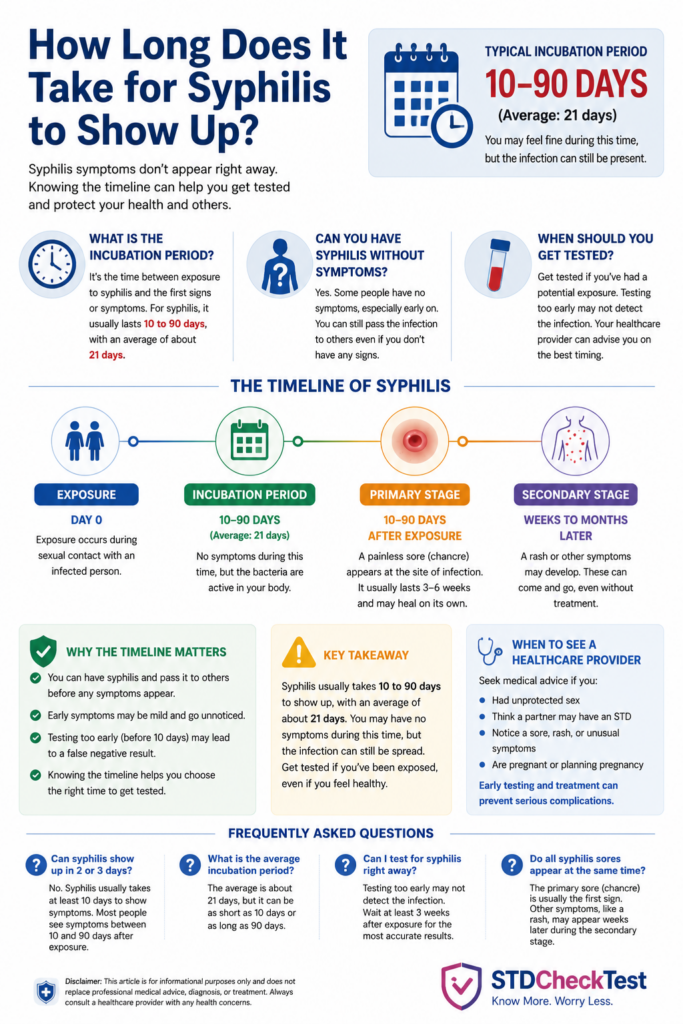
How long does it take for syphilis to show up? Most people develop the first symptoms between 10 and 90 days after exposure, although the average incubation period is about 21 days. Some people have no noticeable symptoms at first, which is why testing is recommended after a possible exposure.
Understanding this timeline can help you know when symptoms may appear and when it’s appropriate to seek testing and medical advice.
What Is the Incubation Period?
The incubation period is the time between becoming infected and developing the first symptoms.
For syphilis, this period usually lasts:
- 10 to 90 days after exposure
- About 21 days on average
The exact timing varies from person to person depending on several factors, including the body’s response to the infection.
What Is Usually the First Sign?
The first symptom is typically a small, firm, painless sore, called a chancre.
It usually develops:
- At the site where the bacteria entered the body
- About 3 weeks after exposure
- Without causing pain, making it easy to overlook
The sore often heals on its own within a few weeks, but the infection remains if it is not treated.

Can You Have Syphilis Without Symptoms?
Yes.
Some people have no noticeable symptoms during the early stages. Others may miss the initial sore because it develops inside the mouth, rectum, vagina, or another area that isn’t easily visible.
Even without symptoms, the infection can still progress and may be passed to sexual partners.
How Long Does It Take for Syphilis to Show Up After Exposure?
The best time to get tested depends on when the exposure occurred.
If you believe you’ve recently been exposed:
- Contact a healthcare provider as soon as possible.
- Follow their recommendation on when testing is appropriate.
- Repeat testing may be advised if the first test is performed very soon after exposure.
Testing too early may not always detect a new infection because the body needs time to produce detectable antibodies.
What Happens After the First Symptoms?
If untreated, syphilis continues through several stages.
After the initial sore heals, some people develop:
- A skin rash
- Fever
- Swollen lymph nodes
- Fatigue
- Muscle aches
These symptoms may also disappear without treatment, but the infection remains active in the body.
Can the Timing Be Different for Everyone?
Yes.
Although 10 to 90 days is the typical incubation period, the exact timeline varies between individuals.
Factors that may influence when symptoms become noticeable include:
- Individual immune response
- Location of the initial sore
- Whether symptoms are mild or easily overlooked
Because symptoms vary, testing is more reliable than waiting for visible signs.

Key Takeaway
Syphilis usually begins to show symptoms 10 to 90 days after exposure, with most people developing the first sore after about three weeks. Because symptoms can be mild—or absent altogether—it’s important not to rely on them alone. If you think you’ve been exposed, speak with a healthcare provider about the appropriate time to get tested.
Frequently Asked Questions
Can syphilis show up after only a few days?
Symptoms rarely appear within the first few days. Most people develop the first signs between 10 and 90 days after exposure.
What is the average incubation period for syphilis?
The average incubation period is about 21 days, although it can vary.
Can I test for syphilis immediately after exposure?
Testing immediately after exposure may not detect a new infection. A healthcare provider can advise you on the most appropriate testing schedule.
Can I have syphilis without any symptoms?
Yes. Some people have no noticeable symptoms during the early stages, making testing important after a possible exposure.
Reference links:
1.Centers for Disease Control and Prevention (CDC) – Syphilis
2. World Health Organization (WHO) – Sexually Transmitted Infections
More informations:
